


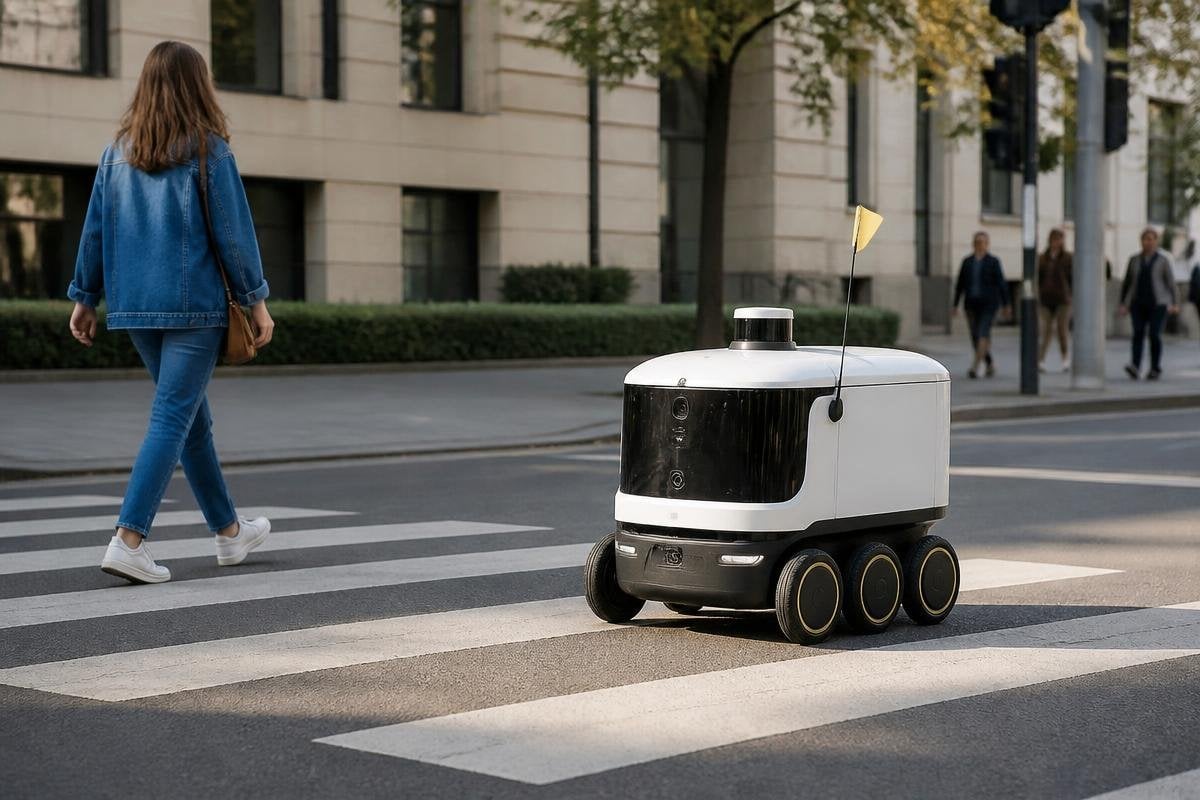
An autonomous machine can sense its surroundings, choose an action, and carry it out with limited human input. That changes the rights question: when a machine affects a person’s safety, privacy, work, or access to a service, who sets the limits?
Quick read
- Rights checks belong in the design and buying process.
- A human needs enough information to review a machine’s decision.
- If nobody can explain or correct the outcome, the system is not ready for wide use.
Where the risk begins
Risk begins when a machine’s output touches someone’s life. Even a warehouse robot moving a box can create a safety issue. At a doorway, a camera system identifying a worker can affect privacy. Job-applicant ranking software may change who gets access to work.
Physical hardware sets the stakes.
A mobile robot can block a path or strike a person. A robotic arm can apply force without understanding pain or consent. Sensors may collect details about faces, voices, locations, and habits while serving another task.
That link between action and effect should guide the review. Ask what the machine can sense, what it can decide, and what happens when its reading is wrong. A rights review that looks only at the software misses the reach, speed, force, and access built into the machine.
Consent and privacy
People need a clear reason before a machine collects information about them. A notice hidden in a long contract does little if a camera is operating above a public entrance or inside a workplace.
The useful questions are concrete. Does the machine record images or sound? How long does it keep them? Who can view the data? Can a person refuse collection without losing access to a basic service?
These questions also apply to machines that do not make a final decision. A sensor may only flag a person for review, yet that flag can still shape how a guard, manager, or public official treats them. Human review helps only when the reviewer can see the source of the flag and has time to challenge it.
For industry readers, Robot24.com is a robotics news platform, and its reporting on machines and autonomous systems belongs alongside these questions about use, control, and public trust.
Safety and responsibility
A machine needs a clear stop process before it enters a shared space. That process should cover faults, unexpected people, lost network access, and sensor failure. The person who can press the stop button also needs training and a safe route to reach it.
Responsibility must stay visible after deployment. The maker may control the design. The buyer may set the task. An operator may approve a run. A service company may update the software.
Those roles can overlap, so the contract and operating plan should state who checks the machine, who records faults, and who pays for a repair or injury claim.
I would pause a deployment if the operator cannot explain why the machine acted, how to stop it, and how to challenge its record.
Work, access, and human control
Autonomous systems can change a job even when they do not remove it. A person may spend less time lifting items and more time watching several machines, handling exceptions, or fixing errors. That shift changes training needs and can raise new safety risks if one operator must respond to too many alerts.
Access matters outside factories as well. A delivery robot, care machine, or automated service may work poorly for people with limited mobility, different body sizes, or limited access to digital tools. Testing should include the people who will meet the machine, not only the team that built it.
A machine should also leave a clear path to a person. That means an appeal route, a named contact, and a record that can be checked later. Human control has little value if the human receives no useful information.
A deployment check
Use this short check before buying, building, or approving an autonomous machine:
- Name the affected people: workers, visitors, customers, or passers-by.
- Map the machine’s reach: sensors, force, speed, movement, and data access.
- Set a stop rule: define who can stop the task and what happens next.
- Record each decision: keep the input, action, time, and person who reviewed it.
- Test the hard cases: include sensor faults, unusual users, blocked routes, and lost connections.
- Give people an appeal: provide a named human contact and a correction process.
This check turns rights from a statement into work that a team can assign and review. The open question is how much decision power a machine should receive before a person must approve each action. For now, the safest boundary is clear: machines can act on human instructions, while people remain answerable for the effects.
